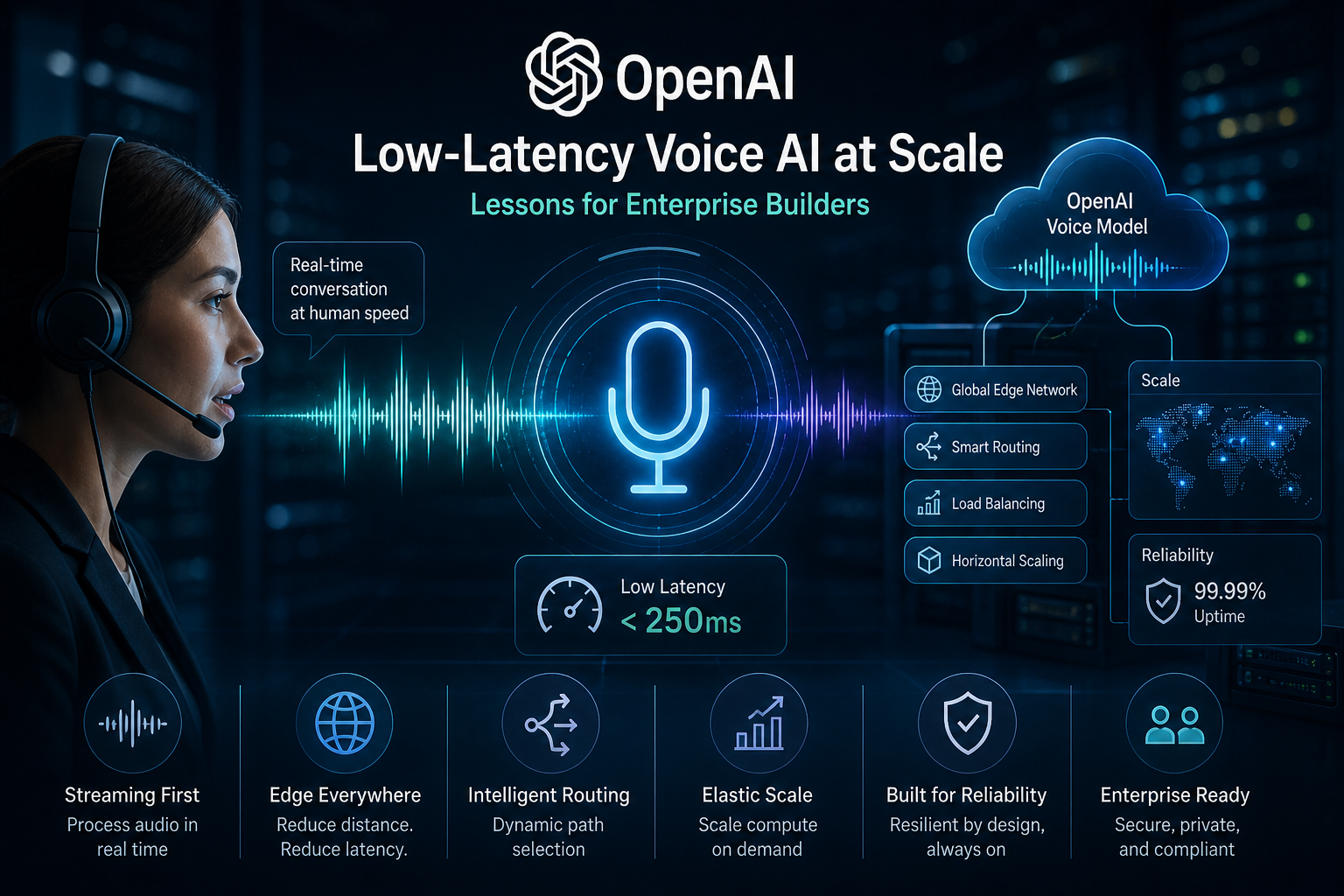
How OpenAI Delivers Low-Latency Voice AI at Scale: Lessons for Enterprise Builders

Intro Voice AI is no longer just a novelty—it’s becoming a core part of enterprise applications, from customer service bots to real-time collaboration tools. OpenAI’s recent engineering deep dive on delivering low-latency voice AI at scale reveals the infrastructure work needed to make these systems feel natural. As someone who’s seen voice projects stall on latency issues, this is a must-read for anyone building or scaling AI-driven interactions. What happened On May 4, 2026, OpenAI published a blog post detailing how they achieve sub-300ms response times for voice AI, even at massive scale. They rearchitected their WebRTC stack to handle global routing, stateful sessions, and efficient packet handling. Key innovations include a split relay architecture, native speech-to-speech models that bypass traditional STT-LLM-TTS pipelines, and advanced voice activity detection for natural turn-taking. This powers their Realtime API, enabling seamless voice interactions without the awkward pauses that plague many systems. ...
May 5, 2026 · 2 min · Mohit Joshi

The Agentic Arms Race: Vulnerability Discovery at Scale

Intro The “security through obscurity” era is dead, killed by agents that can read code faster than humans can write it. This week’s synchronized releases from OpenAI, Anthropic, and Microsoft signal a fundamental shift: AI security is no longer about static scanners, but about adversarial agents locked in a permanent discovery loop. What happened Three major developments hit the wire simultaneously, focusing on “Agentic Security”: OpenAI launched the GPT-5.5 Bio Bug Bounty, offering $25,000 for a “universal jailbreak” of its biological safety layers. This isn’t just a contest; it’s a stress-test for model-level guardrails against high-severity misuse. Anthropic released Claude Security, a defensive tool using Claude Opus 4.7 to autonomously scan codebases, validate vulnerabilities, and—crucially—generate patches. Microsoft announced an AI-driven scanning harness for Azure, designed to automate the validation and prioritization of vulnerabilities based on real-world exploitability. Why it matters We are moving from “point-in-time” security audits to “continuous adversarial pressure.” If your defensive agents aren’t as capable as the offensive ones being tested in these bounties, your window of exposure shrinks to near zero. For enterprise leaders, this changes the “Builder’s Tax”—security is now a runtime cost of agentic operations, not a pre-deployment checkbox. ...

May 1, 2026 · 2 min · Mohit Joshi

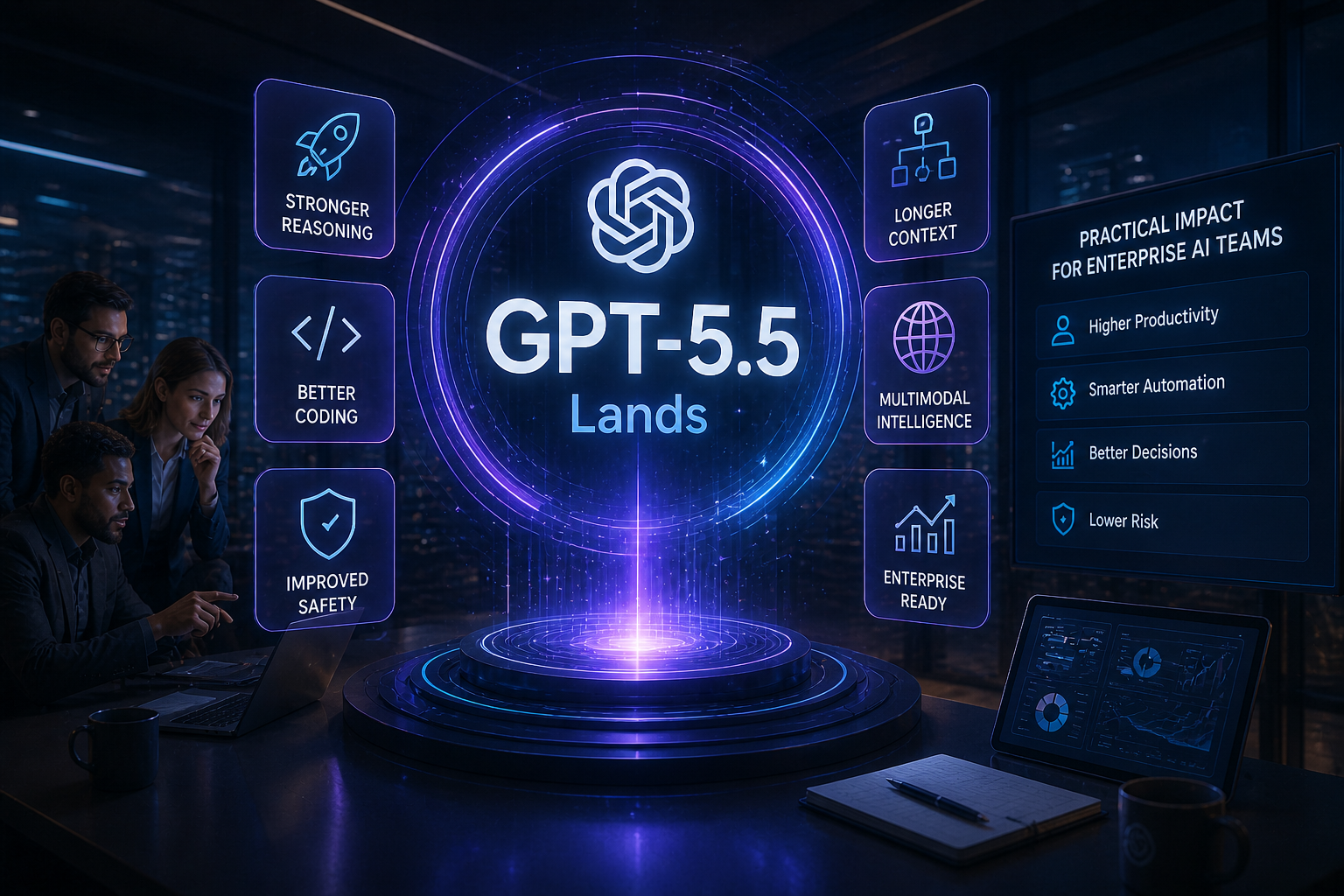
GPT-5.5 Lands: Practical Implications for Enterprise AI Teams

Intro OpenAI’s latest frontier model, GPT-5.5, dropped this week, powering their agentic coding tool Codex and now available in Databricks with built-in governance. For AI leaders and architects, this isn’t just another model release—it’s a step toward more reliable, secure AI in production workflows. What happened On April 23, OpenAI launched GPT-5.5, a new multimodal model with enhanced reasoning, longer context, and improved agentic capabilities. It’s immediately integrated into Codex for coding tasks and rolled out in Databricks for fully governed enterprise use. Key features include better handling of complex queries, bio-safety measures, and a privacy filter for PII redaction. ...

April 27, 2026 · 2 min · Mohit Joshi
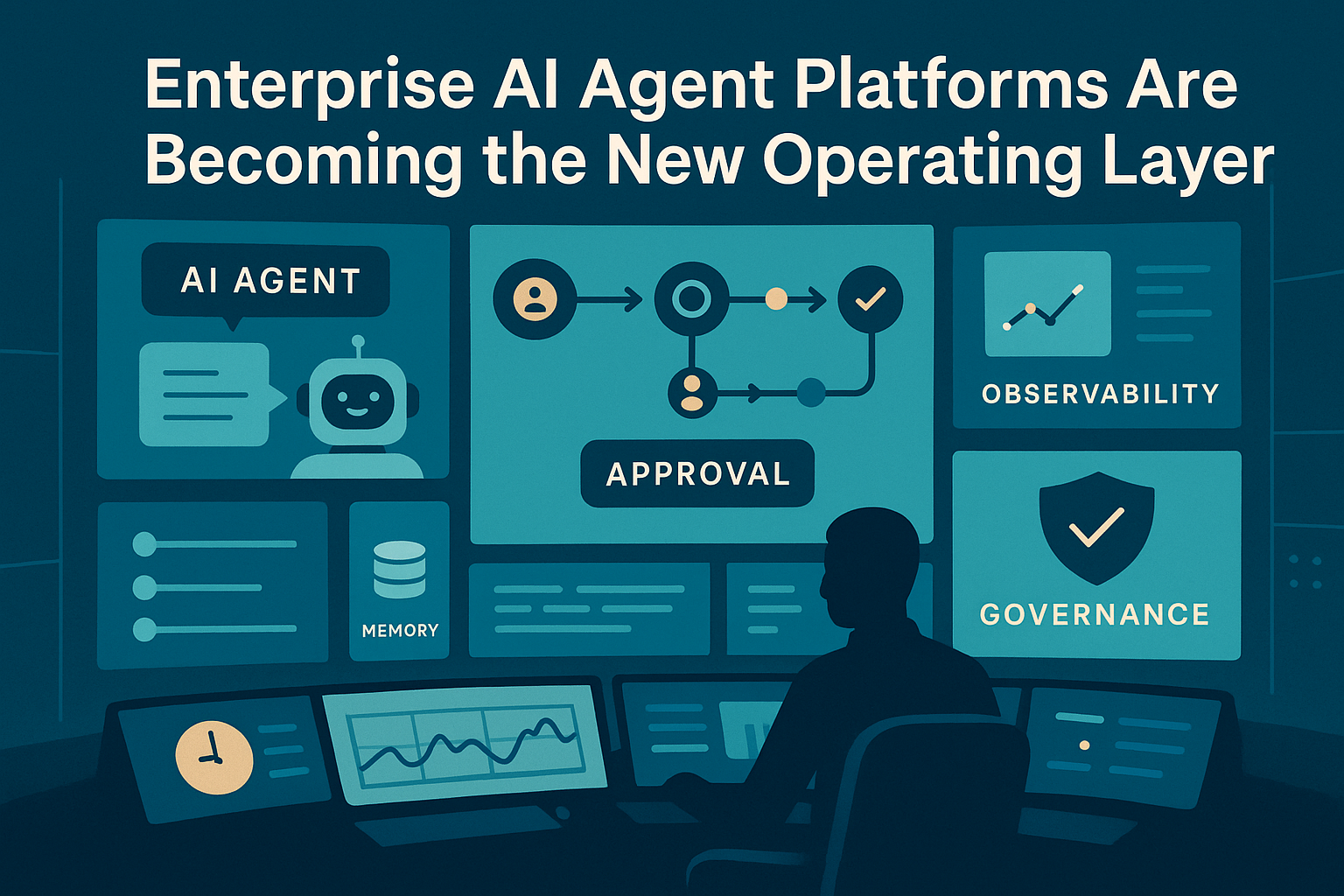
Abstract control room for enterprise AI agents with workflows, approvals, and observability dashboards

Enterprise AI Agent Platforms Are Becoming the New Operating Layer

The important story this week is not one product launch. It is that major vendors are converging on the same enterprise pattern: long-running agents need a real operating layer for governance, runtime, memory, and control.

April 24, 2026 · 5 min · Mohit Joshi