Futuristic AI shield protecting digital code from vulnerabilities

Anthropic's Claude Opus 4.7 and Project Glasswing: Boosting AI Performance and Security for Enterprises

Anthropic’s Claude Opus 4.7 and Project Glasswing: Boosting AI Performance and Security for Enterprises Anthropic has rolled out Claude Opus 4.7, enhancing performance in coding, agents, vision, and multi-step tasks. They’ve also launched Project Glasswing, a collaborative initiative to secure critical software using AI. From my experience in enterprise AI delivery, these developments address key pain points—let’s break it down. What Happened Claude Opus 4.7 builds on previous iterations with stronger capabilities across the board. Accompanying this is Claude Design for visual collaboration. ...
May 9, 2026 · 2 min · Mohit Joshi
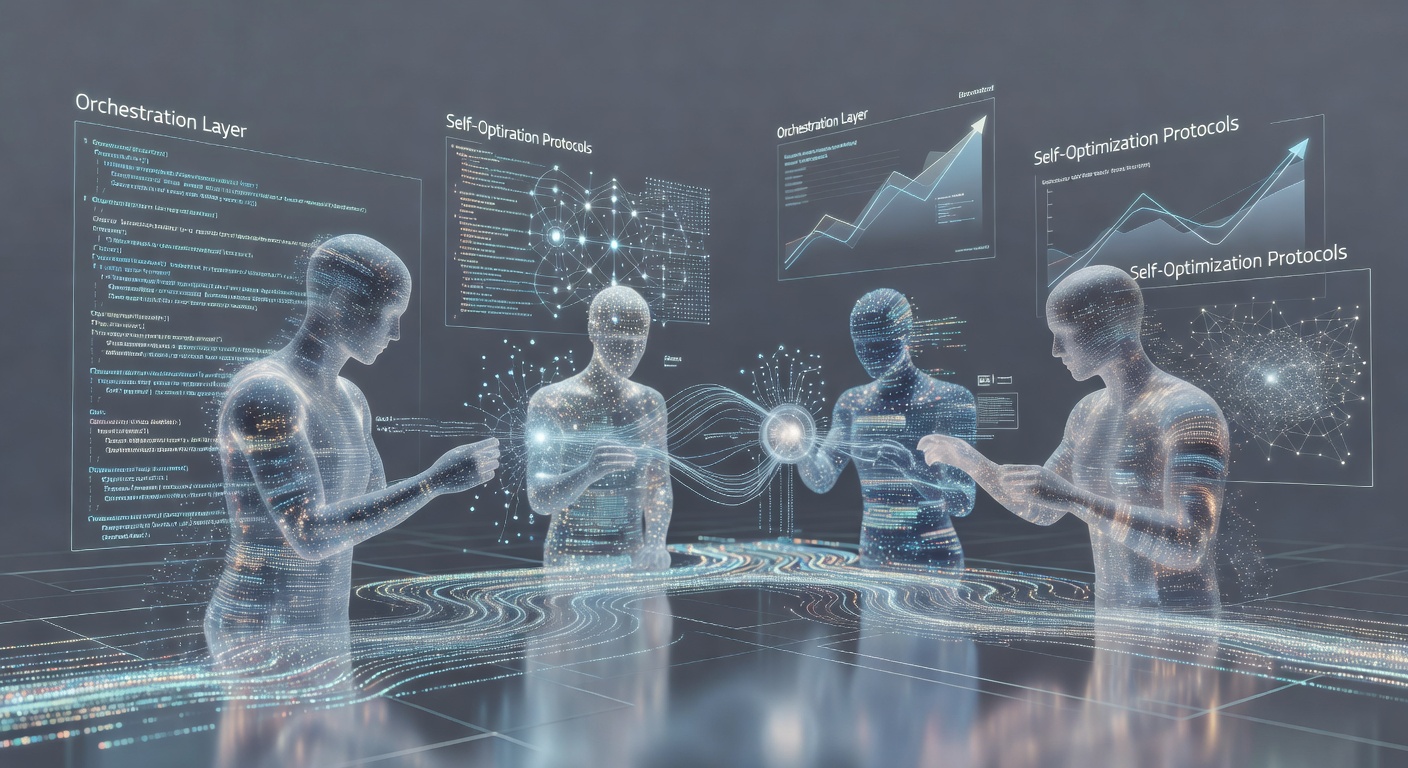
Abstract illustration of futuristic AI agents collaborating in a digital workspace

Anthropic's Claude Evolves: Multi-Agent Orchestration and Self-Improvement for Enterprise AI

Headline Anthropic’s Claude Evolves: Multi-Agent Orchestration and Self-Improvement for Enterprise AI Intro Anthropic just rolled out game-changing updates to Claude Managed Agents, introducing features like “dreaming,” “outcomes,” and “multiagent orchestration.” These aren’t just buzzwords—they’re tools that can transform how teams build and deploy AI in real-world operations. What happened On May 7, 2026, Anthropic announced three new features for Claude Managed Agents: Dreaming: A research preview where Claude reviews past sessions to spot patterns and improve itself. It’s like giving your AI agent a memory boost and self-reflection capability. ...

May 8, 2026 · 2 min · Mohit Joshi
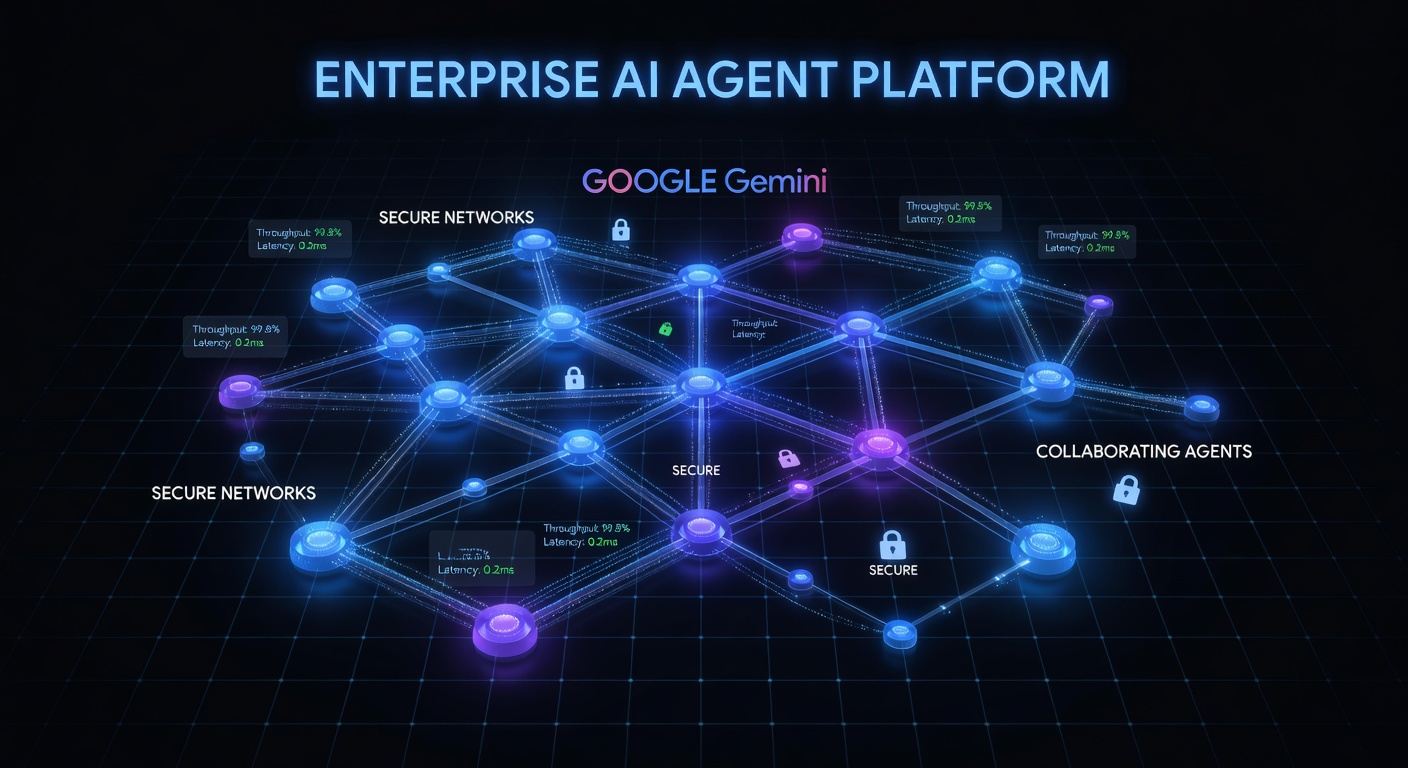
Futuristic enterprise AI agent platform with secure networks and collaborating agents in Google Gemini style

Google's Gemini Enterprise Agent Platform: Scaling AI Agents for Real Enterprise Work

Google just launched the Gemini Enterprise Agent Platform, evolving Vertex AI into a full-stack solution for building, scaling, governing, and optimizing AI agents. This isn’t just another toolset—it’s designed to handle the mess of real-world enterprise deployments. What Happened The platform combines model selection from over 200 options (including Gemini models, Gemma, and third-party like Claude), with low-code and code-first building tools. Key additions include Agent Studio for visual building, upgraded Agent Development Kit (ADK) for complex logic, and new features like Agent Runtime for long-running workflows, Memory Bank for persistent context, and governance tools like Agent Identity and Gateway. ...

May 7, 2026 · 3 min · Mohit Joshi

The End of the All-You-Can-Eat AI: Surviving the Shift to Usage-Based Billing

The era of the “all-you-can-eat” AI seat is ending. GitHub’s announcement that Copilot is moving to token-based AI Credits on June 1 isn’t just a pricing update; it’s a structural shift in how we build and budget for agentic platforms. If you’ve been treating AI as a fixed utility cost, your budget is about to become a variable performance metric. What happened GitHub is transitioning all Copilot plans to usage-based billing. Starting June 1, 2026, the familiar per-seat monthly fee remains, but it now acts as a “credit allotment.” Every agentic interaction—repository-wide chats, autonomous coding sessions, and complex code reviews—will consume GitHub AI Credits based on token usage. ...

May 6, 2026 · 3 min · Mohit Joshi

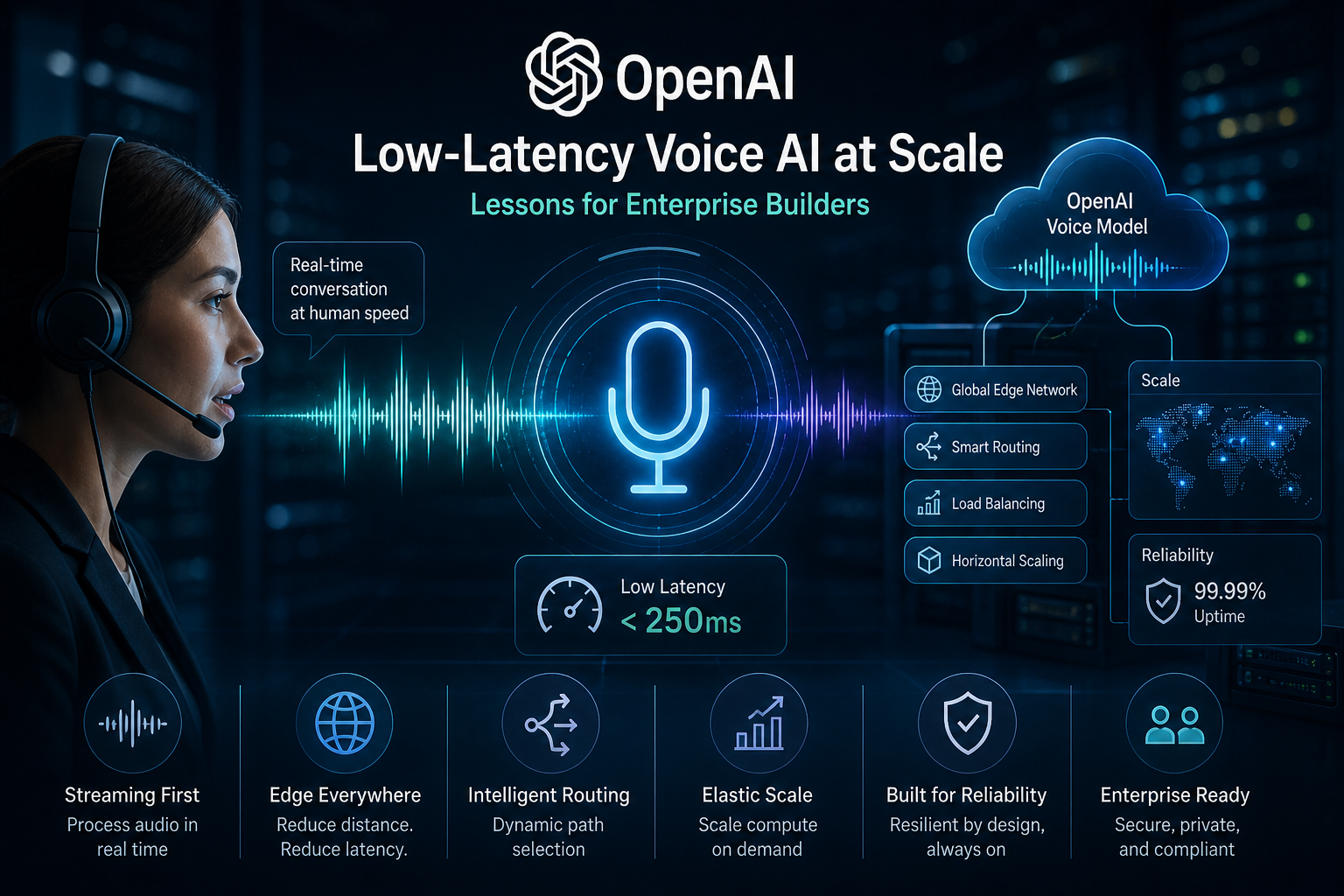
How OpenAI Delivers Low-Latency Voice AI at Scale: Lessons for Enterprise Builders

Intro Voice AI is no longer just a novelty—it’s becoming a core part of enterprise applications, from customer service bots to real-time collaboration tools. OpenAI’s recent engineering deep dive on delivering low-latency voice AI at scale reveals the infrastructure work needed to make these systems feel natural. As someone who’s seen voice projects stall on latency issues, this is a must-read for anyone building or scaling AI-driven interactions. What happened On May 4, 2026, OpenAI published a blog post detailing how they achieve sub-300ms response times for voice AI, even at massive scale. They rearchitected their WebRTC stack to handle global routing, stateful sessions, and efficient packet handling. Key innovations include a split relay architecture, native speech-to-speech models that bypass traditional STT-LLM-TTS pipelines, and advanced voice activity detection for natural turn-taking. This powers their Realtime API, enabling seamless voice interactions without the awkward pauses that plague many systems. ...

May 5, 2026 · 2 min · Mohit Joshi

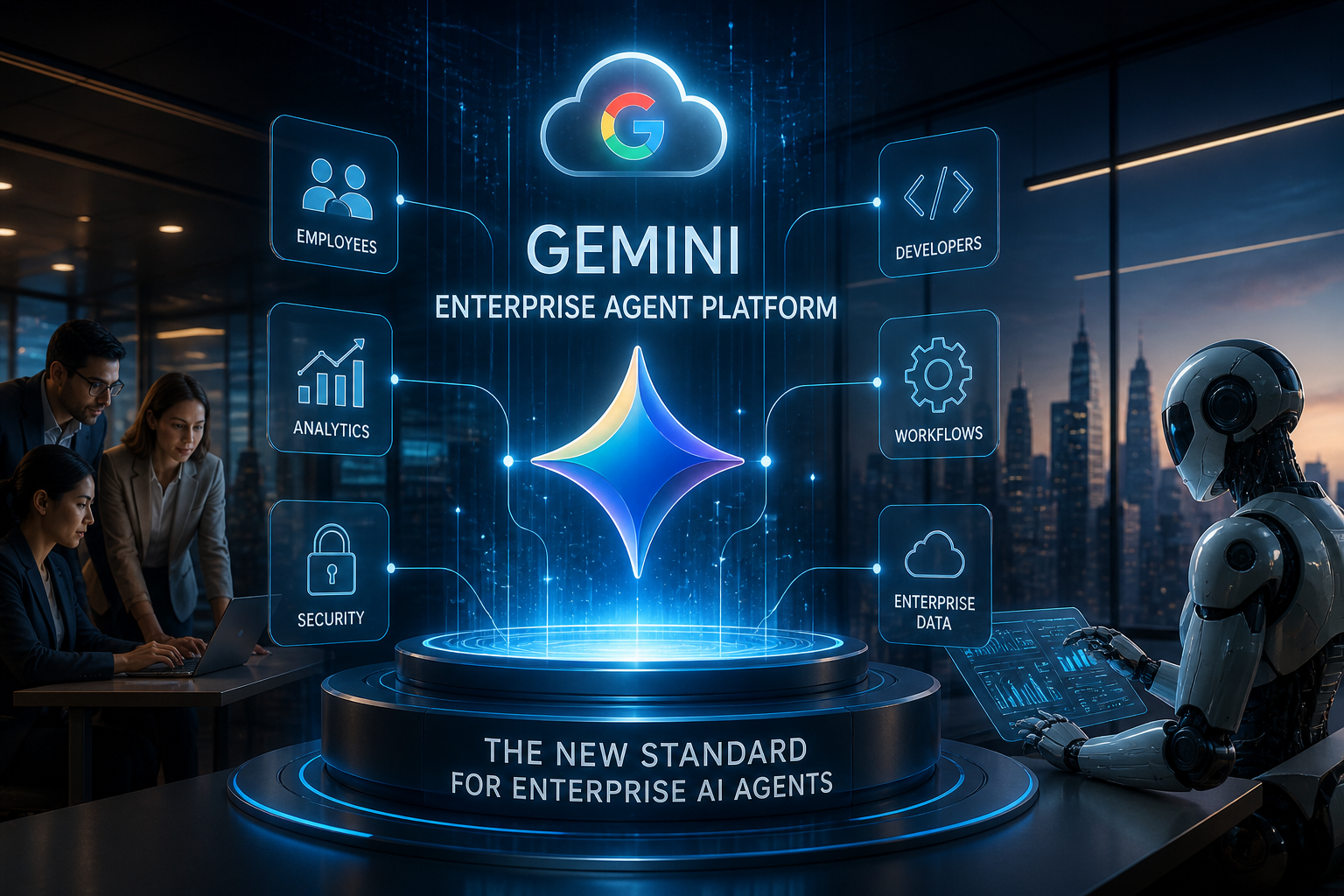
Google's Gemini Enterprise Agent Platform: The New Standard for Enterprise AI Agents

Intro Google has unveiled the Gemini Enterprise Agent Platform, an evolution of Vertex AI that’s set to make building and scaling AI agents a reality for businesses. This isn’t just another tool—it’s a comprehensive platform designed to handle the complexities of agentic AI in enterprise environments. What happened The platform integrates model selection, building capabilities, and new features for integration, DevOps, orchestration, and security. It supports over 200 models, including Google’s latest like Gemini 3.1, and third-party options like Claude. Key additions include Agent Studio for low-code building, Agent Development Kit (ADK) for code-first logic, and tools for long-running agents with memory. ...

April 30, 2026 · 2 min · Mohit Joshi

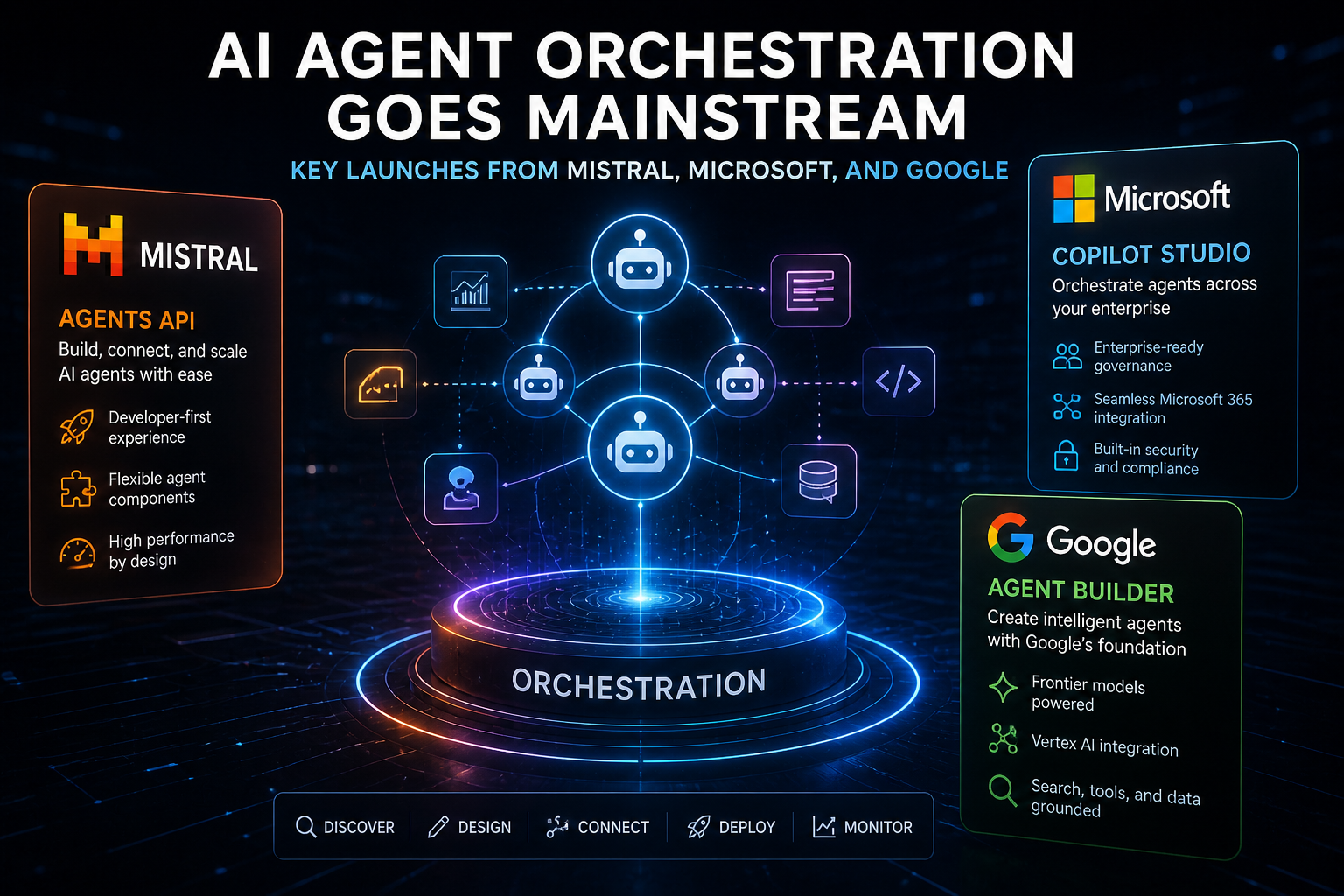
AI Agent Orchestration Goes Mainstream - Key Launches from Mistral, Microsoft, and Google

The landscape of AI agents is evolving rapidly, with major players launching orchestration platforms that promise to make building and managing agentic systems easier for enterprises. Today, let’s dive into recent announcements from Mistral, Microsoft, and Google that could change how teams deploy AI at scale. What happened Mistral AI introduced "Workflows," an orchestration layer for enterprise AI, built on Temporal’s engine, emphasizing reliability and observability. Microsoft announced the General Availability of its Agent Framework (MAF), set to replace Prompt Flow. Google Cloud made managed Model Context Protocol (MCP) servers generally available, providing secure integration for AI agents. ...

April 29, 2026 · 2 min · Mohit Joshi

Anthropic's Claude Mythos: Delaying Release for Enterprise Security Wins

Anthropic is holding back its most advanced LLM, Claude Mythos, because it’s too good at finding and exploiting code vulnerabilities. Instead, they’re launching Project Glasswing to let leading enterprises use it for patching critical software first. This is a smart move that turns a risk into an opportunity for responsible AI deployment. What happened According to recent reports, Claude Mythos is Anthropic’s latest flagship model, but its release has been postponed due to security concerns. The model excels at identifying vulnerabilities in code, prompting Anthropic to create Project Glasswing. This program invites companies like Palo Alto Networks to use Mythos for detecting and fixing bugs in critical software before a broader release. ...

April 27, 2026 · 2 min · Mohit Joshi

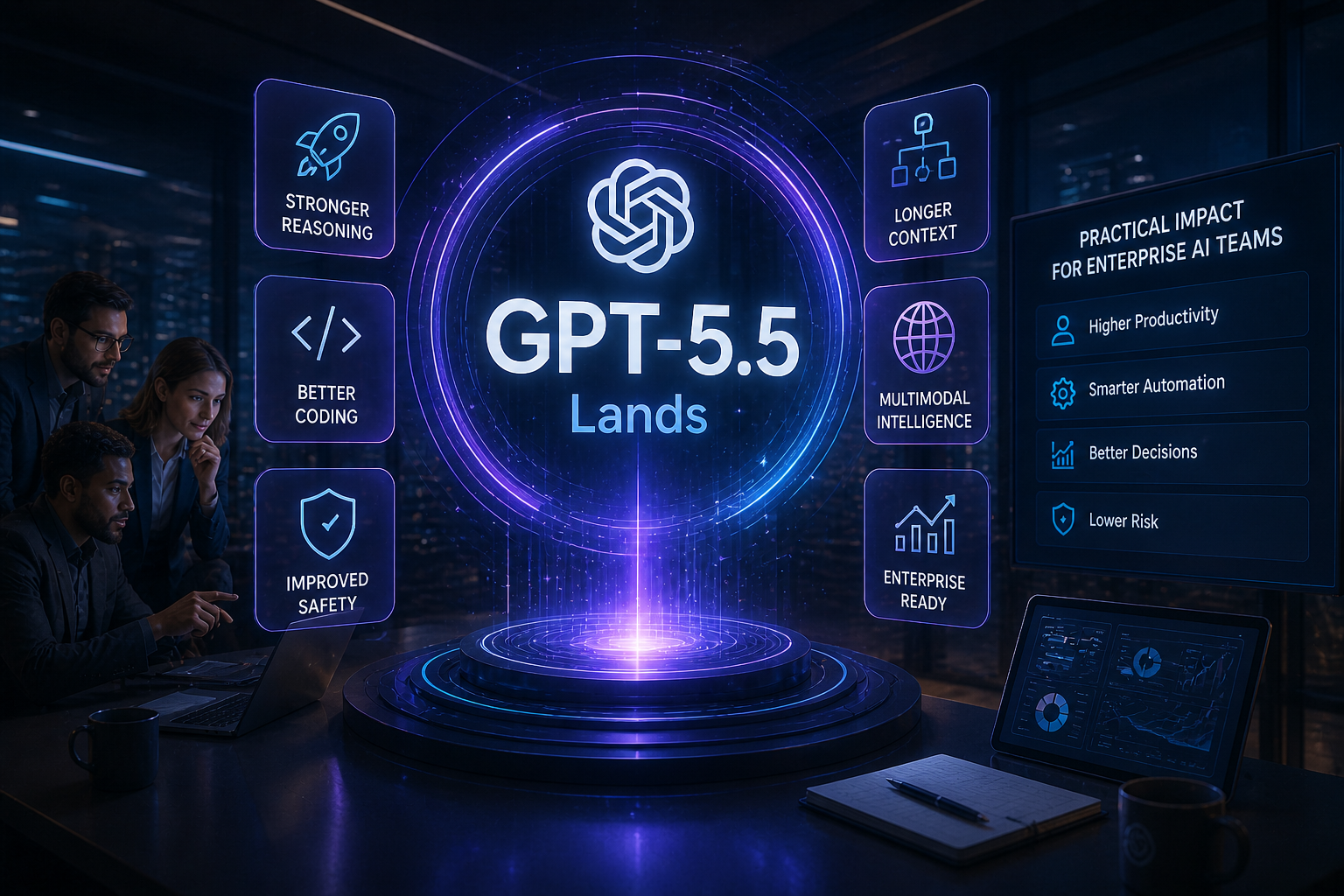
GPT-5.5 Lands: Practical Implications for Enterprise AI Teams

Intro OpenAI’s latest frontier model, GPT-5.5, dropped this week, powering their agentic coding tool Codex and now available in Databricks with built-in governance. For AI leaders and architects, this isn’t just another model release—it’s a step toward more reliable, secure AI in production workflows. What happened On April 23, OpenAI launched GPT-5.5, a new multimodal model with enhanced reasoning, longer context, and improved agentic capabilities. It’s immediately integrated into Codex for coding tasks and rolled out in Databricks for fully governed enterprise use. Key features include better handling of complex queries, bio-safety measures, and a privacy filter for PII redaction. ...

April 27, 2026 · 2 min · Mohit Joshi
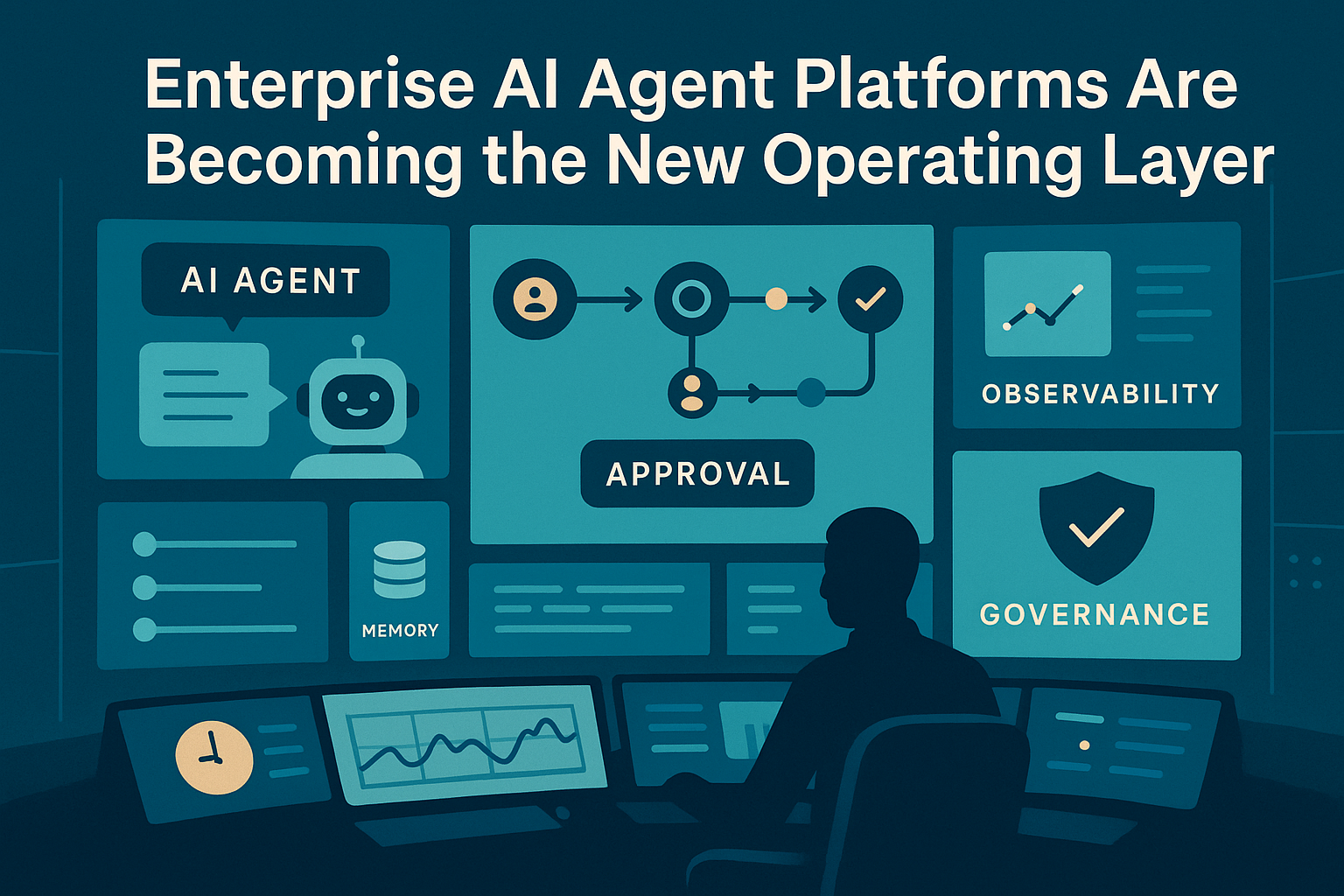
Abstract control room for enterprise AI agents with workflows, approvals, and observability dashboards

Enterprise AI Agent Platforms Are Becoming the New Operating Layer

The important story this week is not one product launch. It is that major vendors are converging on the same enterprise pattern: long-running agents need a real operating layer for governance, runtime, memory, and control.

April 24, 2026 · 5 min · Mohit Joshi