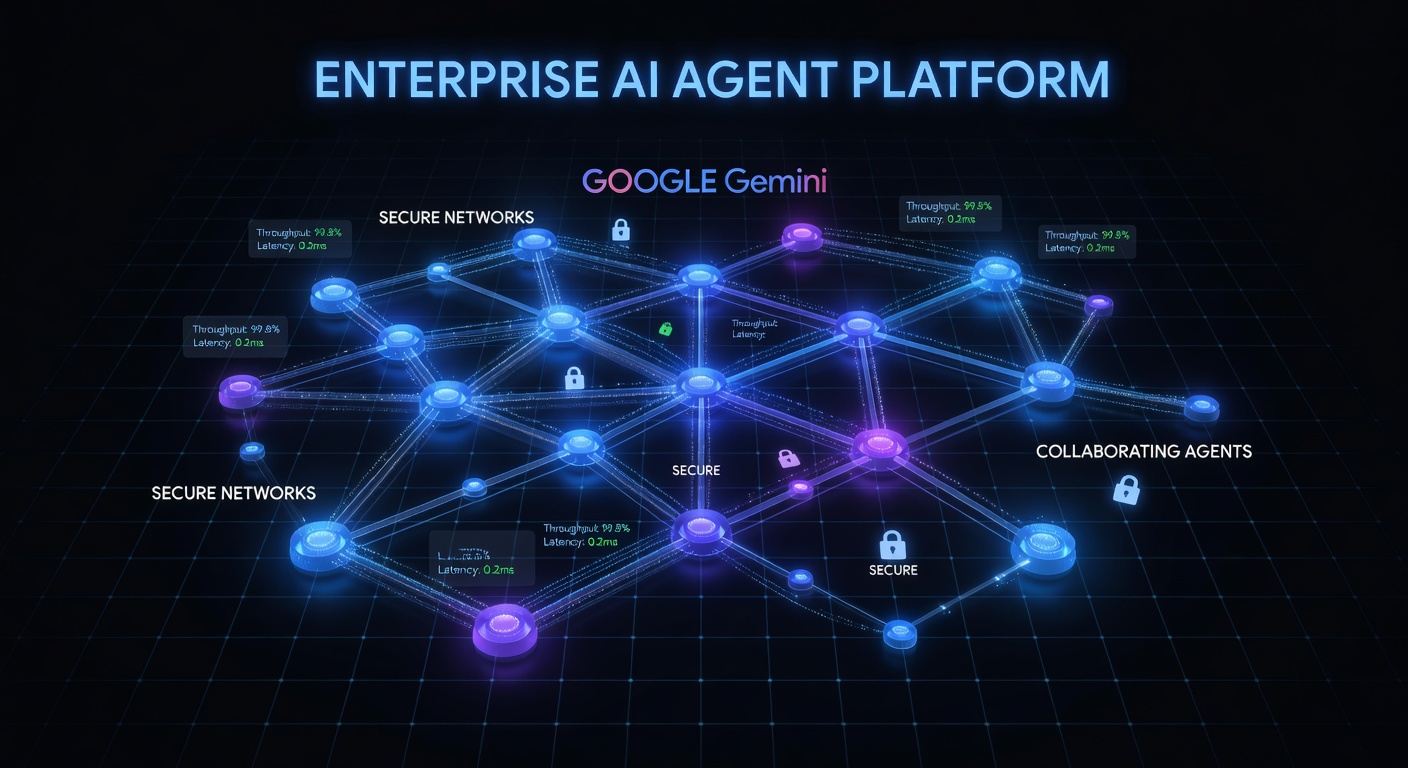
Google just launched the Gemini Enterprise Agent Platform, evolving Vertex AI into a full-stack solution for building, scaling, governing, and optimizing AI agents. This isn’t just another toolset—it’s designed to handle the mess of real-world enterprise deployments.
What Happened
The platform combines model selection from over 200 options (including Gemini models, Gemma, and third-party like Claude), with low-code and code-first building tools. Key additions include Agent Studio for visual building, upgraded Agent Development Kit (ADK) for complex logic, and new features like Agent Runtime for long-running workflows, Memory Bank for persistent context, and governance tools like Agent Identity and Gateway.
It’s built to integrate with enterprise systems, support multi-agent orchestration, and provide security-by-design with sandboxes and anomaly detection. Optimization comes via simulation, evaluation, and observability tools.
Customer examples include Burns & McDonnell using it for project intelligence, Color Health for cancer screening assistants, and Comcast for customer support.
Why It Matters
In enterprise AI, agents are the next frontier—moving from chatbots to autonomous systems that handle multi-step tasks across departments. But scaling them without chaos has been tough: security risks, governance gaps, and performance issues kill projects.
This platform addresses that by providing a governed path from prototype to production. Commercially, it means faster ROI on AI investments—think reducing customer service times by 50% like Payhawk, or activating decades of data like Burns & McDonnell. Operationally, it lowers the barrier for teams to deploy agents that integrate with BigQuery, Pub/Sub, and more, without custom plumbing.
Who Should Care
- AI architects and engineering leaders building agentic systems.
- CIOs and CTOs focused on secure AI scaling.
- Product teams in regulated industries like finance and healthcare needing governed AI.
- Consultants advising on enterprise AI adoption.
What Most People Are Missing
Most coverage will focus on the shiny building tools, but the real differentiator is the governance layer—Agent Identity, Registry, and Gateway create a verifiable chain for every agent action. In regulated environments, this isn’t optional; it’s what prevents AI from becoming a liability. Also, the Memory Bank shifts agents from forgetful bots to context-aware partners, enabling use cases like personalized financial assistants that remember user habits over months.
What’s understated is how this positions Google against AWS Bedrock and Azure AI Studio—by emphasizing agent orchestration and security from day one, it’s betting on enterprises prioritizing control over raw model power.
What to Do Next
- Assess your agent needs: Audit current AI projects for agentic potential—look at workflows involving multiple systems or long-term context.
- Pilot with Agent Studio: Start small with the low-code interface to prototype an internal agent, like a data analysis bot integrated with BigQuery.
- Evaluate governance fit: Check if your security policies align with features like anomaly detection and sandboxes; run a simulation to test failure modes.
- Compare ecosystems: If you’re multi-cloud, test how this integrates with your stack versus competitors—focus on third-party model support.
- Monitor ROI metrics: Track deployment speed, error rates, and business impact in pilots to justify scaling.
Bottom Line
Google’s Gemini Enterprise Agent Platform is a pragmatic step toward trustworthy agentic AI at enterprise scale. If you’re serious about moving beyond pilots, this could be the foundation that makes agents a reliable part of your operations—not just an experiment.