Intro
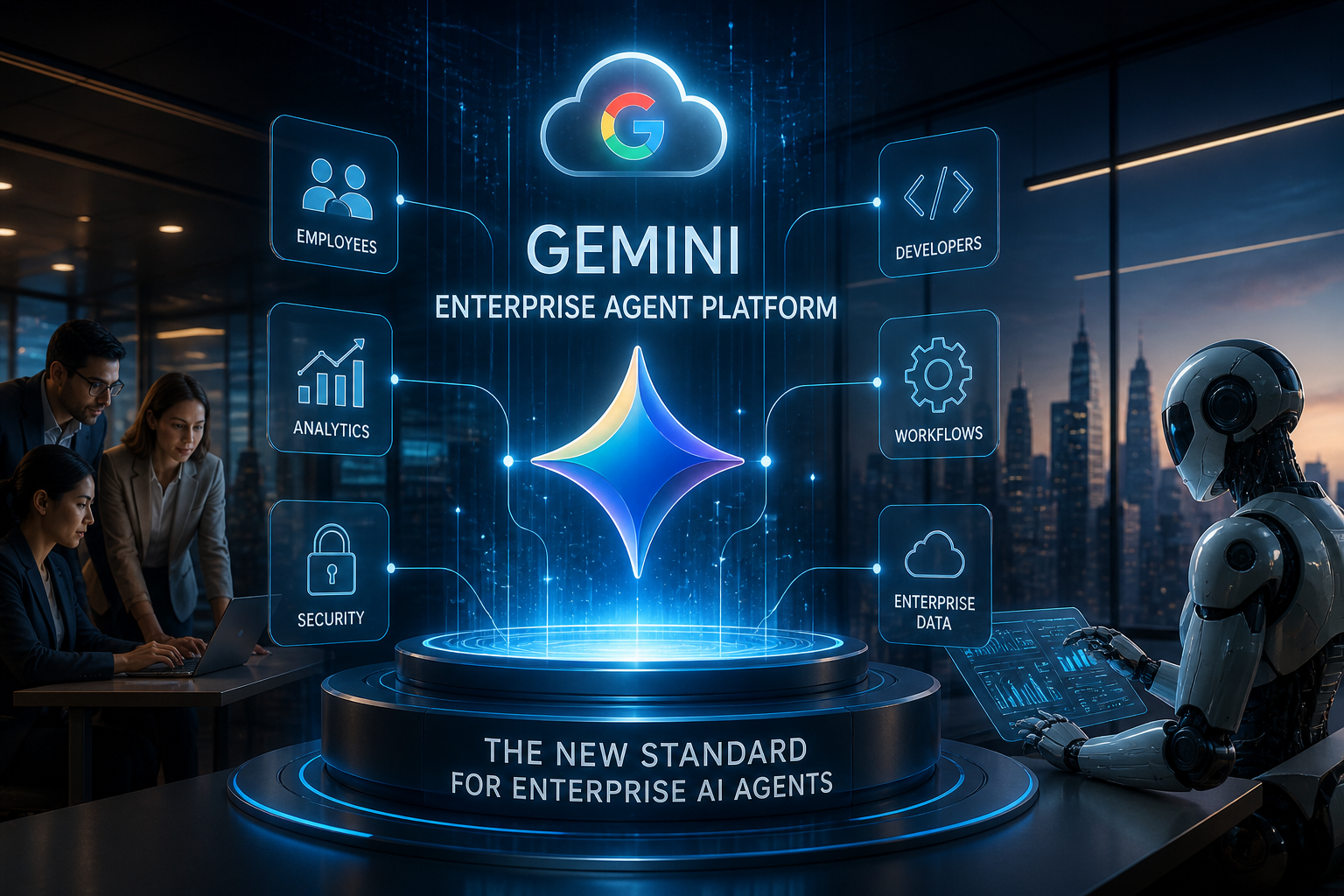
Google has unveiled the Gemini Enterprise Agent Platform, an evolution of Vertex AI that’s set to make building and scaling AI agents a reality for businesses. This isn’t just another tool—it’s a comprehensive platform designed to handle the complexities of agentic AI in enterprise environments.
What happened
The platform integrates model selection, building capabilities, and new features for integration, DevOps, orchestration, and security. It supports over 200 models, including Google’s latest like Gemini 3.1, and third-party options like Claude. Key additions include Agent Studio for low-code building, Agent Development Kit (ADK) for code-first logic, and tools for long-running agents with memory.
Why it matters
In a world where AI agents are moving from hype to production, this platform addresses key pain points like governance, security, and scalability. It allows enterprises to deploy autonomous agents that handle multi-step workflows, reducing operational overhead and enabling new levels of efficiency in areas like customer service, data analysis, and more.
Who should care
CTOs, AI architects, and engineering leaders in enterprises adopting AI at scale. If you’re building agent-based systems, this could streamline your development and deployment process significantly.
What most people are missing
The real game-changer is the focus on multi-agent orchestration and long-term memory. Most discussions overlook how these enable agents to maintain context over days, not just sessions, allowing for truly autonomous operations that integrate with existing enterprise systems without constant human oversight.
What to do next
Head to the Google Cloud console to explore Agent Platform. Start with pre-built templates in Agent Garden for quick wins, then use ADK to customize. Evaluate integration with your current stack, focusing on security features like Agent Identity and Gateway.
Bottom line
Gemini’s Enterprise Agent Platform lowers the bar for production-ready AI agents, combining flexibility with enterprise-grade controls. It’s a step toward making agentic AI practical and trustworthy for business use.